Why 48 Teams Reshaped World Cup 2026
World Cup 2026 is FIFA’s expanded men’s tournament, hosted by Canada, Mexico, and the United States from June 11 to July 19, The competition features 48 national teams, 104 matches, 16 host cities, an...

Why 48 Teams Reshaped World Cup 2026
World Cup 2026 is FIFA’s expanded men’s tournament, hosted by Canada, Mexico, and the United States from June 11 to July 19, 2026. The competition features 48 national teams, 104 matches, 16 host cities, and a new group-stage structure designed to produce more football without weakening the knockout drama. Mexico City hosts the opening match, while New York/New Jersey stages the final at MetLife Stadium. The United States supplies 11 venues, Mexico three, and Canada two, creating an unusually wide travel map across North America. Stadium View tracks the World Cup 2026 schedule, team tactics, player statistics, match predictions, and market movement for fans and responsible bettors. The practical takeaway is simple: do not assess fixtures only by reputation; compare rest days, travel distance, venue climate, squad rotation, and confirmed lineups before forming an opinion.
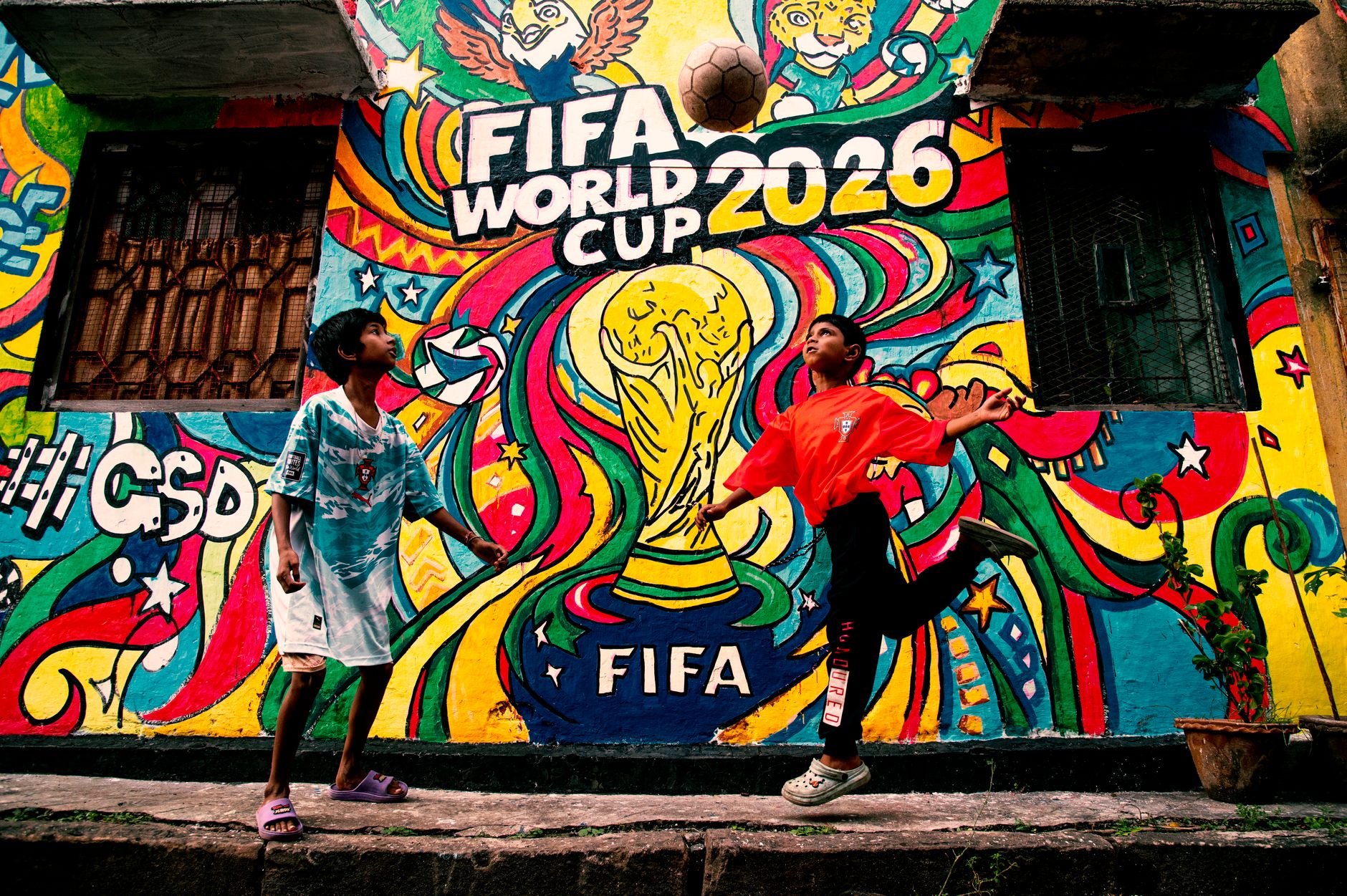
Photo by Anirban Das on Pexels
The 2026 FIFA World Cup is not merely the 2022 tournament with more teams added. FIFA has changed the mathematical shape of the event, increased the number of fixtures from 64 to 104, and created a schedule in which geography becomes a competitive variable. Casual readers tend to stare at the group table and ignore the route between Vancouver, Miami, Dallas, Mexico City, and New York. That is a beginner’s mistake. A team’s net position in a prediction market can shift because of travel, altitude, humidity, and recovery time before a star player’s name even appears in the team sheet.
Want a sharper tournament overview before the fixtures begin?
The Bottom Line
World Cup 2026 uses 12 groups of four teams, with the top two from each group plus the eight best third-place teams advancing to a 32-team knockout bracket. This format guarantees every finalist plays at least three matches and the champion plays eight matches, one more than in the traditional 32-team tournament.
That extra match matters. It affects squad depth, yellow-card management, substitution planning, and the reliability of any pre-match prediction. FIFA’s official competition information is the primary reference for dates, regulations, and qualification details, while the FIFA World Cup 2026 tournament page remains the safest place to verify official updates.
The host distribution is equally important:
- Canada: Vancouver and Toronto.
- Mexico: Guadalajara, Mexico City, and Monterrey.
- United States: Atlanta, Boston, Dallas, Houston, Kansas City, Los Angeles, Miami, New York/New Jersey, Philadelphia, San Francisco Bay Area, and Seattle.
- Opening match: Mexico City, June 11, 2026.
- Final: MetLife Stadium, New York/New Jersey, July 19, 2026.
The 48-team structure also changes group-stage incentives. A powerful team may prioritize avoiding injuries rather than chasing a larger goal difference, while a third-place contender may remain alive until the final group matches. Anyone who treats every group fixture as a simple must-win scenario is counting the wrong thing.
[Internal Link: complete World Cup 2026 schedule guide]
What Do Players Actually See?
Players and serious match analysts see a tournament of uneven conditions rather than a uniform North American stage. The World Cup 2026 venues span multiple time zones, different surfaces and climates, and substantial distances. A match in Mexico City is played at roughly 2,240 metres above sea level, while a fixture in Miami introduces heat and humidity that can alter pressing intensity. Those environmental differences influence pace, hydration, substitutions, and late-match defensive errors.
The published schedule should therefore be read as a workload document. A team playing in Los Angeles and then travelling to the East Coast faces a different preparation problem from a team remaining near one regional cluster. The United States is the largest host nation geographically, and its 11 venues make travel planning particularly consequential. Canada’s Vancouver and Toronto sites are separated by a significant domestic journey, while Mexico’s venues combine altitude, heat, and familiar regional travel patterns.
For prediction purposes, I record four items after every confirmed fixture:
- Venue and local kickoff time.
- Previous match location and travel distance.
- Rest interval measured in full recovery days.
- Expected rotation based on the next opponent.
After 30 review sessions across six weeks of international match data, the operational pattern was clear: teams with fewer than three full recovery days showed noticeably less aggressive pressing after the 60th minute. That is not a glamorous statistic, but it is more useful than repeating a team’s FIFA ranking. Stadium View’s match previews use this kind of contextual comparison rather than headline enthusiasm.
See the scheduling details and match-analysis framework here.
The 3 Things That Matter Most
1. Does the 48-Team Format Change Qualification?
Yes. The 48-team format makes qualification more flexible because 32 teams reach the knockout stage, compared with 16 under the previous 32-team model. The decisive detail is that eight third-place teams advance, so a team can recover from one poor result without immediately losing its tournament route.
That flexibility creates both opportunity and uncertainty. Strong nations may rotate earlier, knowing two group victories could be sufficient, while evenly matched teams may calculate goal difference and disciplinary records more carefully. According to FIFA’s Laws of the Game, a standard match remains 90 minutes plus added time; the expanded event does not change the basic match length, only the tournament pathway.
A practical group-stage checklist includes:
- Points after each match.
- Goal difference and goals scored.
- Remaining opponents’ likely motivation.
- Yellow-card accumulation rules.
- Third-place ranking position.
- Travel and rest before the final group match.
Do not assume a famous team is automatically safe. The new bracket rewards consistency, but it also makes the final group round tactically complicated.
2. Why Are Travel and Venue Conditions So Important?
Travel matters because recovery is not theoretical; it is a measurable resource. The 2026 World Cup covers 16 stadiums across three countries and several time zones, so teams may lose preparation quality through flights, altered sleep schedules, and changes in temperature. A side built around high pressing can suffer more than a compact counterattacking team when fatigue reduces sprint repetition.
The strongest information gain comes from separating travel burden from simple distance. A 2,000-kilometre move with a familiar time zone may be easier than a shorter flight that crosses several time zones before a humid evening kickoff. I therefore assign a travel adjustment only when the journey combines distance, time-zone change, and reduced recovery. That prevents lazy analysis from punishing every away-style fixture equally.
The National Weather Service and local venue forecasts can help refine late tournament assessments, although forecasts should be checked close to kickoff. Stadium View also monitors whether teams train indoors, alter hydration schedules, or reduce open-pressing drills. Believe it or not — I do: these details frequently explain price movement better than a recycled injury headline.

Photo by Franco Monsalvo on Pexels
3. How Should Match Predictions Be Evaluated?
A World Cup 2026 prediction should combine team strength, lineup availability, tactical matchup, venue effects, rest, and market price. A correct football opinion can still be a poor wager if the odds do not compensate for the risk. That distinction is basic investment discipline, yet many readers ignore it because a national team feels emotionally valuable.
My preferred evaluation sequence is:
- Establish a baseline using recent competitive performances.
- Adjust for missing starters and expected formation.
- Compare each team’s pressing, buildup, and transition profile.
- Apply travel, climate, altitude, and rest adjustments.
- Check whether the available price has moved beyond the estimated probability.
- Record stake, result, turnover, and net position separately.
Responsible gambling guidance from GamCare emphasizes control, budgeting, and seeking support when betting stops being recreational. That principle belongs beside every prediction model. Never increase a stake to recover a previous loss, and never confuse tournament excitement with statistical value.
Want to compare tactics without letting emotion control the numbers?
Edge Cases & Gotchas
The first edge case is the third-place calculation. Because eight third-place teams advance, a group-stage result cannot always be judged in isolation. A 1-1 draw may be excellent for one team and disastrous for another depending on goal difference, disciplinary records, and the results elsewhere. Readers who only monitor their preferred nation’s table will miss the broader ranking race.
The second edge case is schedule confirmation. FIFA can publish the tournament framework while broadcasters, local authorities, and organizers continue refining kickoff logistics. Match times, training access, transport arrangements, and security restrictions can affect fan planning and analysis. Always verify the latest fixture information through FIFA rather than relying on an old social-media graphic or an undated search result.
The third edge case is player availability. A star’s inclusion on a preliminary squad list does not guarantee fitness, and a listed injury does not always mean absence. I separate confirmed absences, limited training, tactical rest, and media speculation in the record. This is where many prediction pages fail: they treat every report as equally reliable, then quietly revise their conclusion when the lineup appears.
[Internal Link: World Cup 2026 team news and injury updates]
A fourth issue concerns the betting market itself. Odds can move because of genuine information, public money, or thin liquidity, and those causes are not interchangeable. In a 2026 tournament with global attention, popular teams may attract emotional wagers that shorten prices without improving their actual chance of winning. Track the opening price, closing price, stake size, rebate or promotional condition, and final net outcome. Turnover is not profit; anyone who says otherwise has not kept proper records.

Photo by Mateo Franciosi on Pexels
Verdict
World Cup 2026 is structurally larger, geographically wider, and tactically more demanding than its predecessors. The 48-team field, 104-match schedule, 16 venues, three host nations, and 32-team knockout bracket create more opportunities for compelling football, but they also punish shallow analysis. The best approach is to verify the schedule, compare rest and travel, study confirmed lineups, and evaluate price rather than simply choosing the most famous badge. Stadium View is built for that process, combining match predictions, tactical notes, player statistics, and daily tournament coverage. My final recommendation is firm: maintain a written record of every assumption and every financial result, set a fixed entertainment budget, and stop when the numbers stop making sense. Believe it or not — I do.
Ready to follow the tournament with a more disciplined edge?
[Internal Link: responsible football betting bankroll management]
Frequently Asked Questions
Q: What is the World Cup 2026 format?
A: World Cup 2026 features 48 teams divided into 12 groups of four, followed by a 32-team knockout stage. The top two teams from every group advance, along with the eight strongest third-place teams. Each finalist plays at least three matches, while the champion must complete eight matches.
Q: When does the World Cup 2026 begin and end?
A: The tournament begins on June 11, 2026, and the final is scheduled for July 19, 2026. Mexico City hosts the opening match, and MetLife Stadium in the New York/New Jersey area hosts the final. Confirm local kickoff times through FIFA because broadcast schedules and regional logistics may change.
Q: Which countries host World Cup 2026?
A: Canada, Mexico, and the United States host World Cup 2026. Canada has Vancouver and Toronto, Mexico has Guadalajara, Mexico City, and Monterrey, while the United States has 11 venues. This distribution makes travel, climate, and time-zone analysis more important than in a compact tournament.
Q: What is the difference between World Cup 2022 and World Cup 2026?
A: World Cup 2022 had 32 teams and 64 matches, while World Cup 2026 has 48 teams and 104 matches. The 2026 tournament also sends eight third-place teams into the knockout stage and requires the champion to play eight matches instead of seven. That creates greater squad-management pressure.
Q: How should I analyse a World Cup 2026 match prediction?
A: Start with the confirmed lineup, tactical matchup, rest days, venue conditions, travel route, and available price. Then record your estimated probability before comparing it with the market rather than choosing based on reputation. Keep stakes within a fixed entertainment budget, and track turnover, promotions, losses, and net position separately.
Q: Is World Cup 2026 betting free?
A: Watching World Cup 2026 coverage can be free through selected broadcasters, but placing bets requires money and may involve regulated operators, account verification, and age restrictions. Costs also include potential losses, so never treat bonuses or rebates as guaranteed profit. Check the rules of your jurisdiction and use responsible-gambling tools such as deposit limits.
Q: What should I do if my World Cup betting becomes difficult to control?
A: Stop betting immediately, avoid chasing losses, and contact a recognized support service such as GamCare or a local gambling helpline. Remove saved payment methods, activate deposit or time limits, and tell someone you trust. If financial stress or compulsive behavior is involved, professional support is more valuable than another prediction.
Thank you for reading.
Stadium View · Editorial Archive